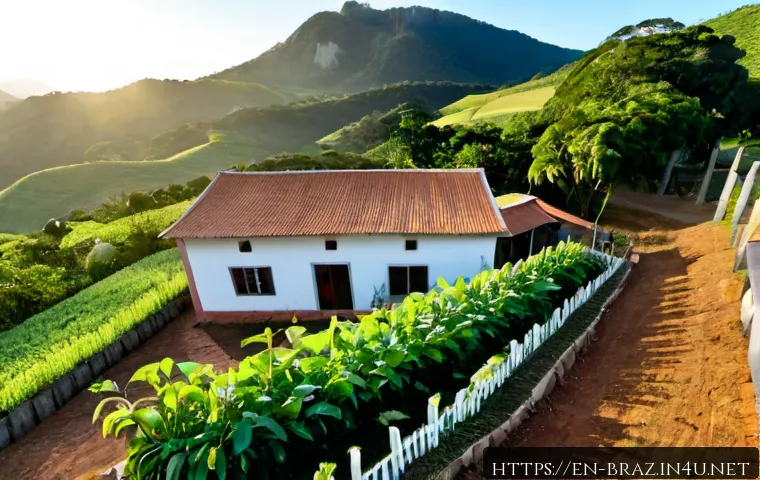
Rural living in Brazil can offer space, nature, and lower day-to-day costs, but success depends on residency status, location, utilities, healthcare access, and property due diligence.
Compare regions, recurring costs, and practical trade-offs before committing.
Rural Brazil can be a practical long-term home if you verify access, utilities, legal status, and residency plans before choosing a property. It is often a better fit for people who can rent first, test the area in different weather, and keep a realistic backup plan for internet, water, and transport. The appeal is clear: more space, closer contact with nature, and a different pace from major cities. However, lower day-to-day costs or a lower asking price can be offset by maintenance, travel, connectivity, and professional property checks. Foreign-income households should also plan around the Brazilian real (BRL), since exchange-rate shifts can change the real cost of living. For most prospective expats, the best decision is based less on scenery and more on whether the location works every week of the year.
At a Glance
- Renters: A small town or edge-of-town home can provide a safer first test of rural life, with easier access to services.
- Remote workers: Check fixed, mobile, and satellite internet options at the exact address before signing anything.
- Land buyers and retirees: Prioritize legal review, water, road access, healthcare travel time, and ongoing property maintenance.
| Location type | Connectivity and access | Daily maintenance | Professional support commonly worth considering |
|---|---|---|---|
| Remote countryside or farm area | May have variable roads, mobile coverage, electricity, and internet availability | Usually higher responsibility for water, access, repairs, and deliveries | Property lawyer, surveyor, inspector, internet provider check, environmental review |
| Small-town outskirts | Often easier access to shops, banks, healthcare, and service providers | Can balance outdoor space with more manageable logistics | Lease or title review, utility confirmation, local property inspection |
| Established countryside community | Access and local knowledge may be easier to assess, but still address-specific | Shared local expectations and property obligations may apply | Legal review, document review, road and water verification |
Is Rural Brazil a Practical Place to Live Year-Round?
The short answer: it can work when access, income, paperwork, and services are planned first
Living in rural Brazil can work well when the practical foundations are in place. A property needs more than a pleasant view or enough land. You need a workable plan for residency status, income, transport, electricity, water, connectivity, and local services. Buying property in Brazil does not by itself grant a residence visa or a right to live in the country long term, so immigration planning and property planning should remain separate decisions.
For an expat or lifestyle buyer earning abroad, it is also important to budget in BRL while keeping an eye on currency exposure. Exchange-rate movements can materially change how far foreign income goes locally. This does not automatically make rural living inexpensive or expensive; it means the household budget should allow for change rather than relying on a single conversion rate.
What daily life usually looks like outside major cities
Daily life may feel quieter and more self-directed than city life. It can also require more planning. Healthcare, emergency response, schools, banks, and government services may involve travel to the nearest town or regional city. A grocery run, repair appointment, bank visit, or medical need can depend on road conditions and driving time.
This is why a nearby town can be a strong compromise. It may offer outdoor space and a slower setting without making every basic task a long trip. For seniors, families, and anyone managing a health condition, emergency travel time deserves the same attention as house size or land views.
The difference between visiting a rural area and living there through every season
A short visit shows the lifestyle at its best. Long-term living reveals the operational details: heavy rain, muddy roads, delivery access, water reliability, power interruptions, maintenance needs, and the actual journey to town. Visit the location at more than one time of year if possible. Ask to see the route from the property to town, not only the final road leading to the gate.
Before committing, test practical routines. Can you make a work call inside the home? Is mobile signal usable where you would need it? Can a delivery vehicle reach the property in wet weather? Is there a dependable water arrangement? These questions are more useful than broad assumptions about an entire region.
Compare Rural Locations by Cost, Access, and Lifestyle Value
Remote farm areas vs. small-town outskirts vs. established countryside communities
There is no single “rural Brazil” experience. Remote farm areas can offer privacy and room for gardening or a small-scale project, but they may require more independent problem-solving. Small-town outskirts can be easier for first-time movers because local services are closer. Established countryside communities may offer a middle path, but the quality of access, utilities, and documentation still varies by property.
Lower upfront housing costs do not automatically mean lower total living costs. A more isolated home may add recurring transport, maintenance, utility setup, water-system, and connectivity expenses. The most suitable option is often the one with the fewest costly unknowns.
A comparison table: housing, roads, healthcare access, internet, and maintenance
| Decision factor | Remote area | Town edge | Countryside community |
|---|---|---|---|
| Housing and land appeal | May offer more privacy and space | Often prioritizes convenience over isolation | Can combine a rural setting with local familiarity |
| Road access | Must be tested carefully in wet weather | May be simpler to reach year-round | Depends on the specific internal and public roads |
| Healthcare and services | May require longer travel | Usually closer to town services | Varies according to distance from the nearest town |
| Internet options | Requires address-specific confirmation | May have more provider options | Confirm fixed, mobile, and satellite alternatives |
| Maintenance burden | Potentially more owner-managed systems | Often easier access to trades and supplies | Check local support and property infrastructure |
When lower property costs can create higher transport and infrastructure expenses
A cheaper plot can create expensive practical questions. You may need to travel farther for supplies and services. A home may need extra planning for water storage, septic maintenance, backup power, road upkeep, or internet equipment. These are not reasons to avoid rural property; they are reasons to build a full cost framework before deciding.
For a remote worker, unreliable connectivity can be more costly than a higher rent closer to town. For a buyer, unclear access rights or uncertain boundaries can be more serious than a lower purchase price. Compare the property as a complete operating system, not simply as a house or a piece of land.
Budget categories to estimate in BRL before relocating
Build a working budget in BRL with separate lines for rent or purchase costs, utilities, internet, mobile service, transport, fuel, maintenance, property taxes, insurance, and professional due diligence. Rural properties are commonly subject to the Rural Land Tax, known as ITR, alongside possible local fees and operating costs. Exact tax, utility, rental, and maintenance amounts depend on the municipality and the property, so they need local confirmation.
Do not overlook the cost of arriving well prepared. A temporary rental, legal review, property inspection, survey work, insurance comparison, and internet setup research can be part of a sensible relocation budget rather than optional extras.
Rent First or Buy Land? Property and Residency Checks
Why ownership and immigration status should be planned separately
Property ownership and the right to remain in Brazil long term are not the same thing. Buying a home or rural land does not automatically provide a residence visa. Before paying a deposit or arranging a move, confirm the immigration pathway relevant to your personal situation through appropriate official or professional channels.
Renting first can reduce pressure. It gives you time to learn the area, test travel routes, observe weather conditions, and determine whether the level of isolation suits you. It can also help you make a more informed decision about whether you need a town-edge location rather than a remote property.
Documents and checks to request before paying a deposit
Do not treat photographs, verbal assurances, or scenic visits as a substitute for documentation. Ask for the documents needed to evaluate ownership, land boundaries, access, and obligations. The exact documents and process can vary, so a qualified local legal professional should advise on what applies to the specific property and buyer.
At minimum, your review should address property documentation, title status, land boundaries, legal road access, environmental obligations, and possible outstanding liabilities. For foreign buyers, additional rules and restrictions may apply depending on land size, location, nationality, and planned use.
Title, boundaries, road access, CAR, ITR, and environmental responsibilities
The Rural Environmental Registry (CAR) is an important environmental registration connected with rural land in Brazil. Its existence does not remove the need for a wider review of the property’s environmental responsibilities. Likewise, ITR is relevant to many rural properties, but the actual tax position and other obligations require property-specific confirmation.
Boundaries and access rights deserve close attention. A road that appears usable may not answer the legal question of access. A fence line may not settle the legal boundary question. Ask a professional to review what the documents show and how that matches the land on the ground.
When a local real-estate lawyer, surveyor, or property inspector adds value
A local real-estate lawyer can help separate a promising listing from a purchase that carries unresolved legal risk. A surveyor can be valuable where land boundaries need verification. A property inspector can help identify practical issues involving buildings, water systems, access, and visible maintenance needs.
When comparing legal-review or property-inspection services, look beyond the headline fee. Ask what documents are included, whether the provider will identify missing information, how findings are communicated, and whether the scope covers the risks that matter most to you.
Utilities, Internet, Water, and Transport: The Everyday Reality
Assessing electricity stability and backup-power needs
Electricity availability and reliability can vary significantly between rural locations. Ask the owner, landlord, neighbors, and local providers about the setup at the exact address. If you depend on power for work, food storage, communications, medical equipment, or water systems, consider what your backup plan would be during an interruption.
The right backup-power approach depends on the property and household needs. First establish the actual local conditions. Do not buy equipment based only on general regional claims or online discussions.
Comparing mobile data, fixed connections, and satellite internet for remote work

Internet is one of the most important relocation checks for remote workers. Fixed connections, mobile data, and satellite internet may each be relevant, but availability, speeds, installation timing, and monthly pricing are location-specific. Ask providers to confirm service for the precise address rather than relying on a coverage map alone.
Use a two-layer connectivity plan. For example, assess a main connection and a fallback option suitable for your work requirements. Test video calls, uploads, and normal work tasks during your rental period or property visit. When comparing satellite internet plans, confirm equipment needs, address eligibility, service terms, and practical setup requirements on the provider’s official page.
Water storage, wells, septic systems, and maintenance planning
Water arrangements can differ greatly between properties. A home may rely on local supply, storage, a well, or another system. Septic arrangements and water infrastructure can also require regular attention. Ask how the system works, who maintains it, what happens in dry periods, and whether there are known service limitations.
A rural home should be evaluated for water reliability, not simply whether water is available during a viewing. Build maintenance time and possible repair needs into your decision. If the property supports gardening or small-scale agricultural activity, water planning becomes even more central.
Testing road conditions, delivery access, and travel times in wet weather
Road access is a year-round livability issue. Drive the full route yourself, including the route to healthcare, groceries, banking, and the nearest regional services. If possible, see it during or after wet weather. Ask whether deliveries, repair workers, and emergency vehicles can reasonably reach the property.
Map-based travel estimates are useful for an initial screen, but they do not replace an in-person route test. A location can look close to town while becoming much less convenient when weather, road surface, or local access conditions change.
Who Is Best Suited to a Countryside Move?
Remote workers who need dependable connectivity and backup plans
Remote workers can enjoy rural Brazil when work infrastructure is treated as a non-negotiable. The best fit is usually someone who verifies service at the address, keeps a backup communications plan, and can tolerate occasional practical disruptions without risking essential work obligations.
Buyers seeking space, gardening, or small-scale agricultural projects
Rural land can appeal to buyers who want outdoor space, gardening, or a small-scale agricultural project. These goals should be matched with an understanding of water, access, maintenance, environmental responsibilities, and foreign-ownership rules that may apply. Enthusiasm for a project is useful; documented feasibility is more important.
Families and long-term residents who need regular access to schools and healthcare
Families and long-term residents should give extra weight to distance from schools, healthcare, emergency response, banks, and government services. A home can be rural without being deeply isolated. For many households, being close enough to a functional town offers a better balance than maximizing acreage or privacy.
When a nearby town is a better choice than an isolated property
A nearby town may be the better choice when convenience, health needs, regular travel, or service access matter more than complete seclusion. This is not a compromise in the negative sense. It can be the practical version of countryside living: more space and a calmer environment with fewer avoidable risks.
Selection Criteria and Comparison Summary Before You Commit
The five non-negotiables: legal status, access, water, connectivity, and local services
Use five checks to compare any rural rental or purchase: legal status, road access, water reliability, connectivity, and distance to essential services. If one of these is uncertain, pause the decision until you have property-specific evidence. A beautiful house cannot compensate for unclear documents, unusable wet-season access, or unreliable water.
A practical rent-versus-buy decision checklist
Rent first when you have not experienced the location through changing conditions, cannot confirm internet and mobile coverage, are still deciding on residency arrangements, or have not learned the local service network. Buying may become more reasonable after you understand the area, have completed due diligence, and can manage the maintenance and travel realities of the chosen property.
How to compare professional quotes without choosing on price alone
Compare inspection, legal-review, survey, relocation insurance, and connectivity options by scope. Check what is reviewed, what is excluded, what evidence you receive, and whether the service is appropriate for rural property. The lowest quote may not cover title, boundaries, access rights, environmental documentation, or infrastructure concerns that affect the final decision.
Selection Criteria and Comparison Summary
Before committing, confirm these points: your residency plan is separate from property ownership; the property has documentation suitable for review; legal access and boundaries are clear; water and electricity arrangements are workable; and internet, healthcare, and town access fit your routine. Compare a remote property with a town-edge alternative using the same checklist. Before choosing a provider, review the official details for relocation insurance, satellite internet, property inspection, and legal-review options that apply to your address and situation.
Final Thoughts
Rural Brazil can offer a rewarding lifestyle, but the decision should be made on practical evidence rather than an idealized visit. Renters can learn quickly by testing everyday routines in a real location. Buyers should protect themselves with careful document review and on-the-ground checks. The strongest rural move is usually the one that leaves the fewest important questions unanswered.
Useful Things to Know
1. Budget in BRL, especially if your income is in another currency.
2. A rural property can have ITR and other local or operating costs.
3. CAR is an important environmental registration connected with rural land.
4. Internet, water, roads, and mobile coverage must be checked property by property.
5. Foreign ownership of rural land can involve additional restrictions.
Important Notes
Property prices, rents, utility costs, tax obligations, visa eligibility, internet availability, and ownership restrictions cannot be assumed from a general guide. Confirm the current requirements for your nationality, intended land use, municipality, and individual property with relevant official sources and qualified local professionals. This article is a planning framework, not legal, immigration, tax, or property advice.
Frequently Asked Questions
Q1. How much does it cost to live in rural Brazil?
A1. Costs vary widely by municipality, property type, access, household needs, and exchange-rate conditions for foreign-income residents. Estimate rent or purchase costs, utilities, connectivity, transport, maintenance, ITR where relevant, insurance, and professional due diligence in BRL before relocating.
Q2. Can a foreigner buy rural property in Brazil?
A2. Foreign ownership of rural land can involve additional rules and restrictions, particularly depending on land size, location, nationality, and planned use. Buying property also does not automatically provide a residence visa or long-term right to live in Brazil. Obtain property-specific legal and immigration guidance before committing funds.
Q3. Is rural Brazil suitable for remote work and reliable internet?
A3. It can be suitable, but reliability depends on the exact location. Fixed internet, mobile coverage, and satellite options can vary significantly between rural properties. Confirm availability directly with providers, test the connection where possible, and maintain a backup plan before relying on the location for remote work.